He was acknowledged as one of the finest crime fiction writers in the ’60s and ’70s; continued writing novels long after. He is semi-forgotten now. No matter. As Gustav Mahler said of himself, his time will come.
That might seem extravagant, comparing a genre novelist to one of the greatest composers of classical music of all time. In his own field, though, Nicolas Freeling deserves the comparison.
Freeling was sui generis. An expression that has also faded with the decline of Latin knowledge in criticism. It means, literally, self-generated, and it’s almost the ultimate compliment you can pay an artist. Someone who has created out of his own experience, rather than following models. Everyone has influences, and there’s nothing wrong with that – in fact, it would be foolish not to be influenced by other artists who are worth it. But not many can digest influences and then go their own way.
He had the great fortune early in his writing career not only to be recognized by top publishers (Golancz in the U.K. and Harper in the U.S.) but, more important in our age, by a TV producer. The series Van der Valk, based on his most famous character, Amsterdam police inspector Piet Van der Valk, ran for nearly 20 years in Britain. (As far as I know, it was never picked up in the States. I saw one episode of the show, in which Barry Foster played the detective, and it was above the norm for its type.) Both factors, but I suspect especially the financial returns from being on the telly, allowed Freeling to range in his own eccentric way thereafter in his novels.
Freeling has been compared to Georges Simenon, whom he is said to have admired. I haven’t read enough of the latter to say. But within the crime fiction genre, Freeling is – if not in a category of his own – close enough to make no difference.
After he got tired of writing about Van der Valk, he created a new character, Henri Castang, an inspector of the French Police Judiciaire. Castang inhabits an anonymous city resembling Strasbourg, where Freeling lived in his later days. Both Van der Valk and Castang as far as you can get from brain cell athletes like Poirot or Holmes. Neither solves fiendishly clever murderers by brilliant deduction. The detectives just wade in, get acquainted with everyone who played a role in the victim's life, and start gently messing with people's minds to see how they react. Freeling’s detective novels are not about who did it, or how, but why.
Freeling’s crime novels (not all of which center on detective work) are psychological puzzles, character studies. The author is interested not only in people, but in their families, associates, and cultural milieu. This curiosity extends to major characters and those with walk-on parts.
From Double-Barrel, with Van der Valk, unusually, narrating:
For information about all sorts of eccentric things, often simply because I had noticed something and been puzzled, I went to the burgomaster’s secretary; she was the greatest help. She knew everybody and everything …
From her I learned of the long-standing quarrel between the Head of Parks and Gardens and the Municipal Gas Works. She knew the whole history of the throat-cutting between the contractors for the new Garden Suburb, and the figures of the loss taken by the subcontractor in electrical equipment for the sake of prestige – it had been she who had seen that he had tried to make the loss up by skimping the workmanship. She was illuminating about the solitary Communist member of the council, about the row over the new hospital equipment that all the doctors claimed was inadequate, about too much having been spent on the swimming bath, and got back by cheese-paring on the new dustbin lorries.
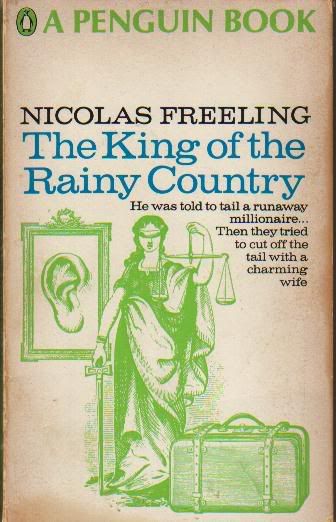
He can sketch a personality in admirably few words. In The King of the Rainy Country, Van der Valk is asked to locate – very discreetly – an old-money oddball, Jean-Claude Marschal, who has disappeared with no apparent motive and no sign of foul play. He goes to interview Mrs. Marschal in their luxurious Amsterdam flat. It’s a standard scene in many detective novels, the down-to-earth detective meeting the rich wife, but Freeling refuses to fall into the routine of making her a condescending bitch. Quite the reverse:
A woman in a silk housecoat was standing on the steps. Narrow vertical stripes, olive-green and silver-grey.
‘Sorry – I was staring admiring.’ She had his card in her hand which she gave back to him, with a careful slow look of appraisal.
‘That does not matter in the least. Perhaps we will go in here, shall we?’ She opened a door beyond the stairs and waited for him.
‘Please sit down, Mr Van der Valk, and be quite comfortable. You have plenty of time? Good. So have I. Would you like some port?’
‘Not just by myself.’
She gave him a slight smile. ‘Oh no. I like port.’ She did not ring, but went to do it herself.
And Marschal himself, as Van der Valk gets to know him in absentia:
Jean-Claude Marschal was bored. He had a boring wearisome life, and found it tedious beyond belief. That was plain to grasp: the man simply found everything too easy. He had vast amounts of money, and was good at everything. He could win things without trying, help himself to everything he fancied without effort. If he dropped a sixpence, he found half-a-crown lying on the path. There was not much that gave him pleasure, not even vice, not even crime. To run off just because he was sick of everything was quite plausible.
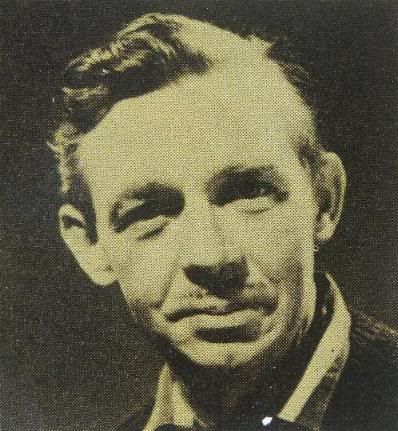
Nicolas Freeling, 1927-2003
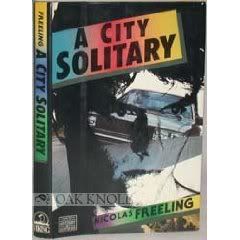
Freeling has perfect pitch for the slightly pompous talk of European officialdom of an earlier time, the '60s through the '80s (maybe it hasn’t changed much since). In A City Solitary, Walter Forestier, whose home in a French mountain town somewhere near the Pyrennes had been broken into while he was at home alone, tied up and menaced, is interviewed by a woman judge. In the French legal system, a juge d’instruction is part of the investigative process.
This animal of a judge was keeping him waiting. The company was not such as to give much stimulus: the usual lady whose nose needed blowing; the usual despondent détenu handcuffed to a black and silver gendarme; the usual businessman, venomous and carefully rehearsed. And how did he look, to these others? He has the feel of greasy steel upon his wrists, and certainly exhales an impression of deserving no better.
At last a clerk popped her head out. A small conniving smile. Walter has a quickly flitting vision of an office unexpectedly gay and decorative.
“I say!” gushing without meaning to, “I like your flowers! Sorry – good morning, Madame le Juge.” A small amused turn to the corners of her mouth. And pretty! …
“Sit down then, Monsieur.”
The clerk, at a side table, is not without merit either: flower-bright with shell-pink horn rims; fair hair in ringlets. Grinning more broadly than her boss.
“We do try, don’t we, Genviève? The flowers help us, from becoming too desiccated? Mm, I’ll come straight to the point, Mr. Forestier. I have a report here from your local brigade of gendarmerie, stating that when questioned on this matter you showed yourself a reluctant and evasive witness. What do you have to say about that?”
“True, I suppose.”
“That is candid. You understand then that I am not a hostile counsel.” Mimicking “ ‘Oho, so you admit that.’ I ask you to explain your attitude.”
“I don’t have one; I’m simply unwilling to testify.”
“I show no surprise at that. But I wish to understand.”
“The police seemed to have plenty of evidence. Or they wouldn’t have come to me.”
“The Sergeant explained that an eyewitness naturally carries weight; with an instructing magistrate – myself; eventually before a court?”
“He put no pressure on me.”
“Reluctant witnesses have in general two sorts of motivation. One is shame towards recounting damaging or humiliating episodes. They may feel they don’t show up very well. Could that account at all for your standpoint?”
“It’s true that I don’t much like to talk about the episode.”
“There is also fear. Of course many people go in fear of the law. Simply of ‘histoires’; of lengthy and tedious procedures. We can eliminate that? Good: fear then of being implicated – of the law’s powers of constraint, coercion, even punishment? I accept your denial. Or lastly, frequent in cases of violence, a fear of reprisals? Or some vengeance visited upon them for helping to shop a malefactor?”
“I’m not, I don’t – sorry, I only mean that’s not my argument.”
Smiling – “I’m waiting patiently to hear your argument. When we’ve got through your objections or hesitations you make a statement, my clerk takes it down, and in all probability the matter’s finished with. Is that so hard?”
Things go too fast, and Walter does not “think”. Later he will think that lawyers, like doctors, like engineers, are so accustomed to their intellectual superiority over all comers that they fall the easiest of prey – it’s classic – to card-sharps, confidence-tricksters and speculators of even the crudest sort.
Forestier is taken prisoner in his own home in the first chapter of A City Solitary. It seems to me a masterpiece of malevolent atmosphere, truly terrifying, even though not a drop of Forestier’s blood is spilled … though he discovers afterward that his dog has had its throat slit.
The generation before mine, thinks Walter, was unusually unlucky. Two European wars, and Spain in between. I have known people who have fought in all three, and what’s more survived them all. Whereas mine was fantastically lucky. Too young for Hitler and too old now for any emotion but complacency. The odd bomb here or there is only Corsican folklore. Europe has become a monstrous suburb and the fox or the hawk are scarcely seen. Only the rats are still there.
Freeling was himself of that generation slightly too young for World War II, but the events of ’39 to ’45 were real and present to him. His books are dyed in places with the authentic atmosphere of a civilizational catastrophe that some managed to live through, while being deeply changed by it. Writing about the Nazi high command that was somehow entwined with the past of a character, he refers to one of the Nazis as “the Fat Man.” He doesn’t bother to spell out that he means Göring. When I was a kid, people still said, “the war,” and everyone understood which.
He’s as deft describing places as people. Background can be terribly boring if an author labors over it, but Freeling is interested in where people live, the furnishings of their dwellings, their taste in books and art. His fascination, expressed concisely and with an eye for the telling detail, is infectious for the reader.
… He was in a street on the outskirts of the town, a very French street leading up a hillside to nowhere, made of gravel for drainage, the potholes and bumps nicely levelled with snow, and people’s furnace clinker strewn about to keep it from getting too slidy. The Impasse des Roses, the roses were in people’s front gardens, covered with little plastic sacks against frost.
The houses were French too, amusing and individual. Ridiculous mixtures of the Savoyard chalet, made of logs built out over the hillsides, and fantasies of prestressed concrete, with garages in the basement instead of cows. They all had glassed terraces and double windows, eccentric roofs, tremendous rockgardens and the kind of letterbox with a wooden bird of no known species that nods its beak when you shove an electricity bill in the slot.
Freeling’s style shifted over his long writing career. The early Van der Valks, from the ’60s and ’70s, were reasonably straightforward police procedurals, albeit unorthodox. In the ’80s, when Castang took center stage, the plotting – never Freeling’s strength – became almost completely beside the point, the language often approaching impressionism.
Although many of the Castang novels are as penetrating in their way as those featuring Van der Valk – I especially recommend Wolfnight – they are a little difficult at times. He acquired a bad habit of making obscure, unidentified references that were surely lost on many readers, myself included. And it has to be admitted that his last few books have only intermittent flashes of the old Freeling cut-and-thrust.
If his reputation is in eclipse, it is partly because he is just too sophisticated for a mass audience. His dialogue is great, but doesn’t consist of the kind of snappy one-liners popularized by Raymond Chandler and carried on by such as Robert B. Parker. The titles of his books are strange, although they are usually quotations, and paid off in the text.
“The king of the rainy country” is Freeling’s metaphor for the wayward millionaire Jean-Claude Marschal, and is adopted from a Baudelaire poem:
"I am like the king of a rainy country: rich – and impotent; young – and very old. Who despises the bowing-down of his preceptors, is as bored with his dogs as with all his other creatures, whom nothing now, neither game nor falcon, can cheer. Not even subjects come to die beneath his balcony. A grotesque song from the indulged clown can no longer unwrinkled the forehead of this cruelly ill man: his fleur-de-lysed bed has become a tomb, and the ladies in waiting, who find any prince good looking, can think up no more lewd costumes to drag a smile from this young skeleton. The expert that makes his gold has never managed to purify the corrupt element in his being, and in the bloodbaths the Romans showed us, recalled to their memory by ageing tyrants, he has failed to rewarm the dulled stupor of a corpse in which blood no longer flows, but Lethe’s green water."
A City Solitary is the remote village in which Walter Forestier confronts evil. The title, we learn, derives from the “penitential psalm known as the Lamentations of Jeremiah, forming part of the old monastic ritual of Tenebrae”:
How doth the city sit solitary, that was full of people.