Tuesday, November 21, 2006

Roman holiday

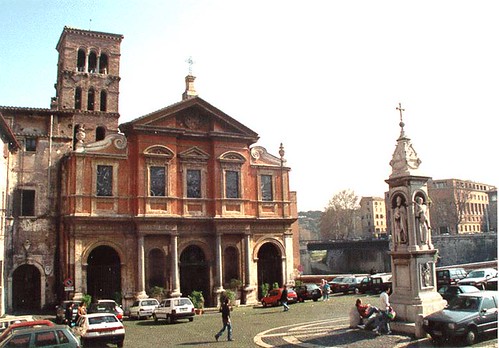
Rome 1

I am leaving for Rome today for a vacation, which I hope will include a certain amount of
dolce far niente (an Italian term meaning "the sweetness of doing nothing"). Fat chance! More likely it will be far troppo (doing too much). But there's no better place than Rome for that!

Back December 2. God bless you, and have a wonderful Thanksgiving.

Friday, November 17, 2006

Meet the old boss

Spr

A record album is our contemporary equivalent of Proust's tea-soaked petite madeleine. Listen to an album that you got to know at an earlier stage of your life and the years fall away, you slip back in time, and today is yet to come, far in the future. It's not just the tune or musician, but the very sound of the instruments (does anyone still play psychedelic-style guitar licks like Barry Melton on the first couple of Country Joe & the Fish albums?), the arrangements, maybe even the microphones or tape recorder that was used — the whole sonic signature can date a piece of music like the cut of clothing. (And I don't mean date in a put-down sense, but placing it in a temporal and psychological space.)

Listening to an old album you've known for years is one thing, but a more eerie experience is hearing an album recorded long ago, but is new to you, although in a genre or by an artist you're familiar with. If anything, that amplifies the "you are there, you are then" feeling.

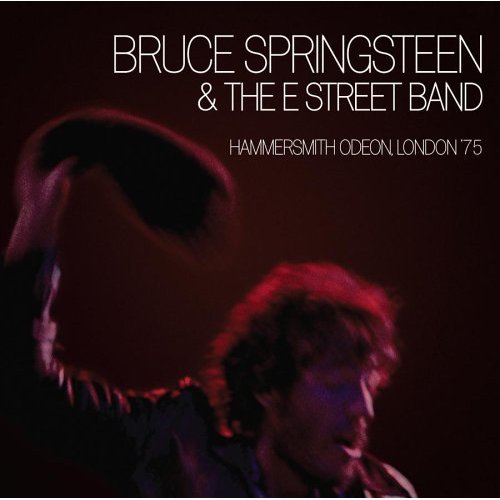
Columbia, now part of the Sony empire, has released a two-CD set of Bruce Springsteen and the E Street Band, recorded at a concert in London, 1975. Not to be subtle, it's magnificent.

The set captures Springsteen and his band at a peak moment, about the time Born to Run was released. Springsteen's muse was cranking as never before and not that often since. These sides have a flamboyant lyricism and exhilaration that have rarely been equalled in the history of rock. Has anyone drawn pure poetry from such an unlikely environment? — rundown East Coast seaside towns in the heavy sultry air of summer, seedy bars with spluttering neon signs in the windows, guys hanging out and eyeing the chicks who pretend to look through them and taking corners too fast in cars with rusting bodies and crumpled Budweiser cans in the back, weeds growing in railroad tracks that haven't seen a train since 1935 but weren't worth demolishing, billboards and steel water towers and stars and rain. Damn if The Boss and his band didn't make all of it deliriously sexy.

This is roots rock, not in the corny meaning of someone imitating earlier styles, but of tradition built upon and extended. Springsteen took what he wanted from jazz, soul, '50s romantic rock, and no doubt much else, and then added his own ingredients. It's amazing to hear music that is so easy to connect to because of its familiar elements, and exciting (even after all these years!) because they're adapted so freshly and fluently.

I think all of the songs performed live here have been released on studio albums (certainly most of them have), but they're well worth acquiring in these versions as well. Too many live albums are just the studio arrangements played more sloppily, but that's anything but the case here. It was the Springsteen band's first concert tour in the U.K., where they perhaps still had something to prove, or they were stoked to be in London after years of playing in New Jersey dives. Or maybe they were just that good in concert all the time in those days. Whatever the reason, you can feel the impact almost as if you were there.

But it was something more than just lots of energy; after all, most rock bands have had plenty of that. Something more even than the quality of the songs and the lyrics, or Springsteen's veering between Jovian thunder and hushed intimacy in the vocal delivery. No, in listening to this release I realized more than ever before how the E Street gang (augmented here, I think, with a few sidemen brought along on the tour) were extraordinary musicians. In these tracks, it's not just the standard intro-chorus-instrumental break-chorus-quick solo-outchorus; they are thought-out, disciplined arrangements and the players stretch out.

As if that weren't blessing enough, the recording is remarkbaly immediate and detailed, especially surprising considering it was taken in a concert setting. I don't know what purpose it was recorded for — probably not for an album, or it wouldn't have sat around for three decades before release — but whoever engineered it knew what he was doing, and deserves our thanks. So, no doubt, do the Sony technicians who remastered it for CD. And kudos to the bright spark of a producer who rescued the tapes from whatever obscure warehouse they were sitting in and enabled us to hear them.

Springsteen has gone on to do much else, some of it very good, and he may have more in him yet. But this CD preserves what are surely among his finest hours of musical brilliance.

Wednesday, November 15, 2006

Consent of the governed? Get serious

Liberalism once meant, according to its apostles, supporting the interests of ordinary people against the rich and powerful. The past is another country, right enough. Dennis Dale at Untethered notes how liberal commentators, for example Jacob Weisberg, nowadays are nervous that mere — sniff — voters might be over-influential with newbie Congresspersons.
Weisberg seems to be lamenting that America is electing the wrong people. We're, apparently, no more trustworthy with the keys to democracy than the Third World primitives that Weisberg wants to throw the border gates open for. (This phrase, electing the wrong people, was used by a member of the Coalition Provisional Authority when explaining the delay of Iraq's promised elections.)

Weisberg's not sure we can be trusted with democracy. We might use it to interfere with market forces.
Weisberg is against "economic nationalism," with its hateful connotations of Americans having a greater say in how the United States is run, and who for, than Mexicans or Indonesians or French. But Weisberg favors "economic populism" because, as Dale puts it, "unlike its evil twin above, it knows its place, limiting itself to minimum wage laws, confiscatory taxes and stumping for social programs, while accepting whatever may come of unbridled immigration and outsourcing."

Weisberg worries that "most of those who reclaimed Republican seats ran hard against free trade, globalization, and any sort of moderate immigration policy. That these Democrats won makes it likely that others will take up their reactionary call. Some of the newcomers may even be foolish enough to try to govern on the basis of their misguided theory."

Dale comments, aptly:
'Moderate' of course means not having the coarse manners to take enforcement seriously. Is this fair, when 'enforcement first' is nothing more than an attempt to enforce existing law? At what point did we make the deliberate decision that our immigration laws were no longer needed and our border a mere inconvenience?

The federal government has silently and without the assent of a distracted public gotten away with abnegating its responsibilites over the last twenty years (since '86's amnesty law and its ignored enforcement provisions). This is a curious interpretation of the consent of the governed in a republic.
There's a reason why Third World countries get that way, and stay that way. It's not something in the water or the way the planets are lined up. You may run into the odd psychiatric case study such as a U.S. president with delusions of being, not Napoleon, just Maximilian, Napoleon III's Mexican Emperor. But the transformation of our country into an overpopulated, debt-ridden, elite-run society is perfectly rational if you're among the Chosen Ones.

Which would you rather be? (a) Someone in a closely knit circle of acquaintances — people of this sort don't have friends, exactly — who get what they want without the tedious business of working too hard, persuading lots of people, and following inconvenient and possibly even wealth-constricting laws? (b) An ordinary citizen, tied down by all kinds of restrictions for the common good, forced to try to get laws passed thorugh political give-and-take without always succeeding, not especially looked up to or given special treatment?

If you answer (b), then I commend you on your virtue. But don't be too sure what you would choose if (a) was actually in your power, if you had but to part your lips, speak your wish and watch it carried out by the state and its running dogs in the media. So much simpler. Saves a lot of bother all around. Gives you more time to be gracious and swan about with your peers who have razor-sharp creases pressed into their jeans.


Whether they fly the flag of multi-culturalist social engineers or economic libertarians, many among today's media, academic, and corporate elite choose Door no. 1 above. They're impatient with mossbacked reactionaries stuck in values like historic and cultural traditions, national borders, laws enacted from the broad base of people rather than from the top down. They don't care if the country works or not — hell, they don't have to actually live in it, except in protected enclaves where they can look down on the proles — as long as it works for them. What makes it work for them is importing a huge reservoir of poor, ignorant plantation hands that can be manipulated to overbalance any residual influence from the dwindling middle class.

A secondary value of dredging the world for dollar-a-day migrants to add to the U.S. population is that they help buy off the government parasite class of social workers, report writers, legislation drafters, etc. A huge new group of the "underserved" to be inducted into the welfare industry! Bigger "human services" departments, more projects, more regulations to administer! The best Chris — oops, "holidays" present ever.

This isn't some dystopian fantasy of the future; it's the explanation of the otherwise inexplicable, taking shape all around us now.

Saturday, November 11, 2006

A "velvet revolution" for America: 2

Vanishing American has asked pertinent questions in his comment on my previous posting (see below). I was going to respond in the comment box, but decided the further discussion deserved a new posting of its own.

He wonders, "What was it, in your opinion, that made the 'Velvet Revolution' possible? From what I understand, the decaying system sort of fell of its own weight; nobody truly believed in it anymore, and the house of cards fell."

VA is correct. The system in Czechoslovakia was held together by the apparatus of a police state (until, I think, even that began to break down toward the end) and was so dysfunctional that nobody believed in it anymore or supported it except from self-interest. As my Czech ex-girlfriend -- a civil engineer -- told me, the common saying in her office and others was, "They pretend to pay us, we pretend to work."

No such cynicism pervades the United States. Most people believe that our system works pretty well, whatever their particular complaints. And that has been true for most of our history as a nation. It's part of the problem today: we can't imagine that the good times could ever be over, that the national character that has enabled us to achieve so much and give so many people a shot at their own idea of a good life is being undermined.

It seems to me that it is; but most people aren't especially alarmed because it's being accomplished in discrete, cumulative steps that can be made to look like the kinds of adjustments we've often made in the past. (Thus, a huge migration of people who enter the country illegally to grab a piece of the action, and far from wanting to adopt American values, bring their own culture intact and maintain it in ethnic enclaves, is compared with immigrants who came to become Americans in a time when the nation had a third as many people.)

As I said in the earlier posting, it's not clear how many will just go with the flow and accept whatever changes come down because, like most people everywhere, they are too busy with their jobs and recreation and dealing with their own problems. But from my reading of the uncensored media -- i.e., mainly the Web -- there is no doubt that a certain percentage of the population isn't going to go quietly.

No one knows what the future holds, but I can imagine several factors that could expand that population manyfold. The first, which seems likely, is if Congress passes an amnesty-by-whatever-name (even more so, if there is a delay and "Sun King" Bush decides his mission can't wait any longer and asks his legal advisors how he can do it by putting pen to paper). The next precipitating events would be an obvious doubling or tripling of immigration, runaway population growth leading to further sprawl, rising crime rates. Another would be European-type legislation to suppress opposition as "hate speech." A collapse of the credit quicksand that upholds this economy would add yet another element to the mix.

A major terrorist attack would seriously tilt the board.

My interest in the concept of a "velvet revolution" has to do with how the opposition would behave under those circumstances. I think we've got to start talking and laying the foundations now, not in the heat of a later moment. We mustn't let the resistance be shaped by pure anger. It must not be channelled into violence, particularly random violence against migrants or foreigners, which the state would quite rightly suppress by force.

So what's my plan? I have to say again, it doesn't matter what my plan is. Or anybody's. The soft revolution needs to morph organically, naturally, through the initiative and trial-and-error of thousands of individuals, similarly to how the blogosphere has developed. We don't want a manifesto that becomes a movement that hardens into an ideology that winds up with factions cursing one another and expelling deviationists.

All those individuals will need to work together in many ways, but not on the orders of a charismatic leader. This has to be a bottom-up, not a top-down, revolution. The Establishment can stop a top-down revolution by taking the leaders off the field. It can't remove thousands or millions who just won't cooperate, who use the power of choice (whether it's what to buy or boycott, or whom to vote for) and the American system of multiple jurisdictions in which states and even towns -- e.g., Hazelton, Pennsylvania -- can exert their own power against the federal behemoth.

Let's keep it focused. No griping. No pointless demonstrations. No wasting time writing letters to the editors of hopelessly biased mainstream media. Let's use our minds and our imaginations and our heritage as free men and women of America. What more does a "velvet revolution" need?

Thursday, November 09, 2006

A "velvet revolution" for America

When in the course of human events, it becomes necessary to acknowledge that a nation's "leaders" have turned against its ordinary, middle-class citizens to become servants of international corporations and of a bordering country ruled by drug pushers; when they have no guiding principles beyond hoarding power, economic expansion, and suicidal tolerance; when those same "leaders" intend, for their various reasons, a thorough ethnic replacement scheme for that nation; and when they perceive the country to which they are supposedly responsible as no more than a marketplace, cut off from its historical and cultural roots, a space for buying and selling from sea to shining sea — the people have a choice.

The first alternative, of course, is to go along. If the Devil is whispering in your ear, he's telling you that that's exactly what the majority of Americans voted for this week. Maybe the old boy is right. Maybe a sociological Gresham's law has been at work for 35 years, ensuring that everything trashy and stupid about the '60s counterculture has driven all that was good in it from circulation. It surely doesn't help that several generations have been educated (to use the word loosely) in schools that no longer teach them how to read, write, or think. Perhaps as a culture we don't understand any values except technology, and i-this and nano-that are our household gods.

Maybe too many of us have led sheltered lives for too long, wrapped in a comforting blanket of politically correct pieties that leave us unable to comprehend that we actually have enemies, not just others whom we don't understand yet or vice versa. And maybe we voted Tuesday to go the way of utopian decadence: let us have our GNP growth and cell phones that cook our breakfast and 250 channels of shopping TV and reality shows, and invite the world to come mow our lawns and deliver our pizzas while the party goes on and on.

If that's what the American people as a whole voted for, here's what they'll get, and they'll deserve it: another few million illegals every year, many giving birth at taxpayer expense to babies who will automatically become welfare dependents — excuse me, I mean U.S. citizens. More taxes to support Medicare and Medicaid for our proud newcomers. A country where English-speaking descendants of northern Europeans, British, and Irish are a minority that will probably still be legally discriminated against via "affirmative action" in 20 or 30 years. Very likely further severe hits from Muslim terrorists, as they are welcomed into our "nondiscriminatory" multi-culti paradise and are confirmed, understandably, in their contempt for a country that abolishes its own borders and thinks it's advancing peace by not defending itself.

Do not be surprised at what happens. The international corporate class and the social work Establishment that drools at the thought of a huge new clientele do not like Anglo-Saxon-Celts. I know that's not the sort of thing you're supposed to say out loud, but it's true. They don't want citizens with a long heritage of flipping the bird to Authority and sometimes rebelling against their Betters. Their ideal is a small corporate Mandarin class and a vast population of subliterate, servile peons.

Don't kid yourself. That's what we're headed for. It's going down.

But I know this, as much as I know anything in heaven or earth: there are still a lot of Americans who won't stand for it. Most have never heard the (probably apocryphal) story, but it's bred in their bones: back in the Old West, a European visitor came upon a ranch hand out where there weren't a dozen settlers within a hundred miles, and after making the proper self-introduction, asked him: "Who is your master?"

The ranch hand replied, "He hasn't been born yet."

Now, if that man's blood flows in your veins, you are in for some tough times. I mentioned there is a choice. Your choice, if you don't intend to serve the international business interests and the multi-culti Mafia for all your days, comes down to this: revolution.

Don't get me wrong. I'm not talking about some romantic nonsense of wearing a beret and tying a bandana around your neck and hiding up in the maquis. Or keeping a stash of rifles in your backyard and taking potshots at the enemy.

It must be a "velvet revolution."

The term comes from the overthrow of the Communist regime in Czechoslovakia in 1989. It got that nickname because it was a "bloodless revolution." I knew a man who covered it, in situ, for the Associated Press. He said he greatly admired what the Czechs and Slovaks had accomplished, blowing away the oppressors "without a single person being hanged from a lamppost."

And that is what I ask you to consider. I'm dead against any sort of violent revolution, not just because I don't want the karma of suggesting it, but because it won't work. Take up the sword and they will kill you. I'm being literal, not metaphorical. I've been in a crowd of demonstrators, itself potentially homicidal, that was fired on with live ammunition. I'm also old enough to remember Kent State. Believe me, if those who imagine themselves as rulers expect for one second that they are in danger of physical violence, they will order the police or military to terminate you. The uniforms may not like it, but they'll do it; they have solemnly pledged to subordinate their own feelings when they are told to.

So, how would this American "velvet revolution," which I see as the only alternative to the death of everything we hold dear, work? Look, I don't know, and it wouldn't matter if I did. Success won't come from anyone's plan or manifesto. It will happen the way that the Resistance has taken shape in the blogosphere, by free minds connecting with one another, outside of any effort organized from a particular source.

It will probably involve various kinds of passive resistance: refusal to obey laws, standing up to persecution for what the multi-culti Establishment will try to brand as "hate speech," tax refusal, all that and more. Hey, Washington, want to see a million-man-woman march for real? How about ten million? Just give los illegals amnesty.

Whatever the tactics, they must be a form of
jujitsu, winning without material weapons. Don't think that can work against the seemingly infinite power of the forces that pull the government's strings? Back to Czechoslovakia for a minute: I had a relationship with a woman who had lived there under the Communists. She and her then-husband and their children escaped by a fake "visit" to Austria. They did not dare tell their own parents they were leaving, forever as it seemed at the time. All their possessions, practically all their money, had to be abandoned to get out. That's what Czechoslovakia was like in the early 1980s. And it fell without a shot on either side, because people who had never even known freedom had an instinctive understanding of what it would be like and what they had to do. Not even the corporate/social work/liberal Establishment in the United States has the power that the Communist tyrants had. You think our "masters," too, won't buckle at the knees?

Even so, I hesitate. Unarmed resistance doesn't insure against punishment. In asking you to consider it, I'm not sure I would have what it takes. I'm too old and have trouble imagining myself in prison for a cause. Maybe I'm like the proverbial general sending the young cannon fodder into the front lines.

I think what I am suggesting, though, is the only alternative to the death of America except as a purely geographic expression. If you're not up for that kind of self-sacrifice, I don't blame you and am probably one of your number. Others may feel different.

So, as always and everywhere, it's down to you. I've tried to suggest what the choice involves, but I can't tell you what to do. If it's what you decide, take the path of least resistance. The party is just getting started, although it's almost over. Enjoy it but don't check the clock or look up. It's late, and it's getting dark.

Wednesday, November 08, 2006

It's the end of the world. Now what?

I wish there was a morning-after pill for this election.

One of Lawrence Auster's correspondents, RB, sums it up:
Things look pretty bleak. Unfortunately the following is now the most likely scenario as this new century unfolds. The treason party which includes the Bush-McCain Republicans and the Pelosi Democrats are now free to flood the country with millions of amnestied illegals, guestworkers and their consequent enormous chain immigration. While the US can survive some immigration, this enormous number (some estimates say 66 million over the next ten years—and of course untold numbers afterward) will lead to the end of the US in its present form. I foresee massive unrest and possibly civil war in the Southwest.

Also the enemies are gathering. Resentful masses from south of the border led by the likes of Chavez will enter into an alliance with the Muslims. Terrorists as well as ethnic agitators will stream into the US. Very likely America will fragment into even more pieces than the Soviet Union. Also, abetted by “the champions of the downtrodden working class” known as Democrats, big business will scour the world for cheap labor and this will include a reservoir of eager comers from teeming Muslim areas like Pakistan, Bangladesh, Indian Muslims, Egypt, Indonesia etc. These will form large Muslim enclaves here as is now the case in Europe.

With the end of America, there will be no one left to stand up to the growing Islamic power and Muslims will indeed take over Europe and most other areas of the world. In addition, they will accomplish what even Hitler was unable to achieve—put an end to Jewish history. The only way this world domination would be averted is if China, the one remaining superpower, and one without the destructive western guilt and PC mentality realizes that its civilization is now on the line and takes the sort of extreme action that westerners find so distasteful.

RB is probably a little over-optimistic.