Sunday, October 14, 2007

Dreamifornia calling

Photo Sharing and Video Hosting at Photobucket

Reading the news has put me, as usual, in a sour mood. I'm fit to write the earth a bad review. How can people be so


... sorry for the interruption, that was my nurse -- nice Greek lady, Mrs. Peristalsis I think her name is -- always bang on time with my meds and insists I take them, even if I'm in the middle of writing a blog post. She brought with her a note from Dr. Ouija. Let's see ... well, this is quite a turn-up! He's written me a prescription for two weeks in California. Tells me to get some sunshine, drive up the coast, see a few waves (thanks, Doctor, how about you waive a few fees?).

Two weeks, give or take, in California is likely to induce (a) exhilaration, (b) depression, or -- this would be my prediction -- (c) both.

I will probably not be posting during the trip; I don't own a laptop, which limits the opportunities for taking one. Look for this blog to resume production after October 26, assuming a fault line doesn't open and cause me to disappear into a crevasse. Who needs it? I have enough faults already.

Photo Sharing and Video Hosting at Photobucket

Saturday, October 13, 2007

New York to America: Drop Dead

Photo Sharing and Video Hosting at Photobucket
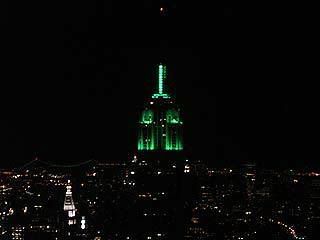
The Empire State Building, a couple of miles from Ground Zero,
lit up to celebrate the Muslim holiday Eid.

Not even a direct attack to its own heart by devotees of a fanatical politico-religious cult can stay New Yorkers from their precious multi-culturalism.

Next time I hope the suicide bombers sink the whole bloody island.

I don't mean that. Not quite. Not yet.
Photo Sharing and Video Hosting at Photobucket

Wednesday, October 10, 2007

Zoned out in France

Bordeaux. Aix-en-Provence. Arles. Nice. Paris, City of Light and all that. How they capture the imagination. History, architecture, wonderful food and wine, civilization and its refinements.

Only, they and more than 700 other cities and towns in France include what are called Zones Urbaines Sensibles (ZUS). No, not "sensible urban areas." Sensible translates more accurately as "sensitive." That is, n0-go areas for police and non-North African, non-West African, or non-Muslim French people.

Photo Sharing and Video Hosting at Photobucket
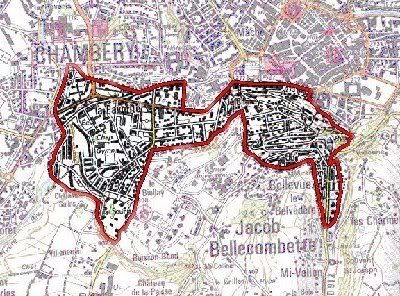
ZUS at Chambéry outlined in red.


According to Daniel Pipes, they are "
places in France that the French state does not control. They range from two zones in the medieval town of Carcassone to twelve in the heavily Muslim town of Marseilles, with hardly a town in France lacking in its ZUS. The ZUS came into existence in late 1996 and according to a 2004 estimate, nearly 5 million people live in them."

This information was published late last year, but in case you missed it (as I did), it's worth taking a look. I had no idea how extensive these enclaves are.

These ZUS aren't just a journalistic or popular name. They're officially recognized by the French government. Here is a link to an interactive list. They are ordered by départements, jurisdictions more or less equivalent to English counties or Canadian provinces. To see any of the maps, click on carte to the right of the location name. You can then zoom in to a fairly detailed resolution. The red-bordered area in each map is the ZUS.

Photo Sharing and Video Hosting at Photobucket

I looked at the map for Arles, famous for Van Gogh. I was surprised during my visit to see so many North Africans there, but that was before I knew much about France's demographics. They were in the greatest numbers, so far as I could tell, in the run-down area by the port that was bombed heavily in World War II and never recovered economically. According to the map, Arles's ZUS isn't in that section, though, but just across the railroad tracks from Les Alyscamps, the atmospheric ancient Roman cemetery where Van Gogh liked to sketch and which he painted.

All these ZUS represent sociological land mines throughout France. Their residents are almost completely alienated from traditional France — because of French prejudice, or because they are incapable of assimilating, or both. We saw several of the zones in the suburbs of Paris explode a couple of years ago, and I have no doubt that under not-unimaginable circumstances, they could all blow up.

Photo Sharing and Video Hosting at Photobucket

The French government is pursuing various schemes to win the allegiance of those who live in these outlaw areas.
Theodore Dalrymple seems to believe they are beyond the reach of government, however well intentioned (although the intentions probably stem from fear as much as benevolence).

French officialdom is trying to fix the problem with the usual social amelioration programs, job creation, affirmative action, and so on. It's probably useless to expect anything else from a European government — it's the only language they know. But North and West African Muslims are unlikely to integrate into the French system, other than in the most superficial ways. Maybe even that will be enough to keep a damper on violence, and the country will be reconciled to having two permanently separate cultures. But if the standard liberal remedies don't work out, France needs an alternate plan, and had best be prepared to carry it out.

Photo Sharing and Video Hosting at Photobucket

Monday, October 08, 2007

Down with multi-culturalism, may it please our Muslims

Minette Marrin, in a column headlined "Fear of offence is killing our culture" for the Times of London, wants us to know how brave she is:
‘So, Minette Marrin – all cultures are equal, yes or no?” This was the challenge put to me live and rather scarily by a BBC World Service presenter a few years ago. ... “No,” I said firmly, but nervously, since I don’t like inviting contempt and anger any more than anyone else.
Sorry, Ms. Marrin, but you just have, on the part of this reader. The rest of her column explains why.

"Many prominent multiculturalists, including the Commission for Racial Equality itself, have recently performed swift U-turns and the bien-pensant orthodoxy now is that multiculturalism has been a divisive failure. Integration is the new big thing," she writes. But,

There are still signs that many people are in the grip of the old orthodoxy; its hold on public institutions and the public mind seems to be remarkably persistent. A week ago The Sunday Times reported that some Muslim workers in Sainsbury’s [a U.K. grocery chain] are refusing to check out purchases of alcohol on the debatable ground that it’s against their religion. Whenever the sinful stuff is presented by a customer at the till, the Muslim expects an infidel colleague to hurry over and sully his or her hands with the transaction instead.
So, it's another sign that Britain has systematically imported an incompatible culture? Oh, no. Perish the thought. "The point about this story is not the absurd demand, but that Sainsbury’s gave into it, quite unnecessarily, of its own free will. It wasn’t even being pressed to do so by any prominent Muslim figures."

Photo Sharing and Video Hosting at Photobucket

And so on, in the same vein. The problem isn't with an intolerant religio-political group that demands the majority culture adjust itself to conform to Muslim ways; it's those companies, suffering from dhimmitudia nervosa. Sainsbury's hadn't received any demands from "prominent Muslim figures."

But that Commission for Racial Equality, which has supposedly hung a U-turn just before being reincarnated as the even more all-inclusive Commission for Equality and Human Rights, headed by -- who'd have guessed? -- the same witchfinder-in-chief, Trevor Phillips, departs (as The Spectator notes)
... with a threat that 15 government departments may be taken to court — at our expense, presumably — because they haven’t checked the precise ethnic origin of everyone who works for them. There is no suggestion that the departments have discriminated against British Caribbeans, or British Bangladeshis, or British Static Travellers (yes, there really is that wonderful category); merely that they haven’t yet asked everyone if they’re properly and nicely white or not. The crime is one of ‘non-compliance’. And along with that, the report churns out the usual stuff about how Britain is ever more segregated, socially and in the workplace, and that extremism ‘both political and religious’ is on the rise.
The Commission recently turned its awe-inspiring moral force to urging that a book of 75-year-old comic strips be banned. The "equality watchdog" (a frightening term) accused one of the books of "making black people 'look like monkeys and talk like imbeciles'." That privilege, apparently, is reserved for the Commission.

Photo Sharing and Video Hosting at Photobucket

But to get back to Marrin: she carefully avoids taking a position about what Sainsbury's should have done if those "prominent Muslim figures" had insisted that no Muslim clerk's fingers should touch a bottle of plonk. She continues the theme:

Surely the fault lies with Sainsbury’s, for cultural funk. And it lies with all those others who out of some strange abandonment of common sense – such as the government’s laissez-faire guidelines on wearing Muslim veils in schools last week – bottle out.

Think of the headmistress in Yorkshire who removed stories about pigs, including the Three Little Pigs, from her school in case they might offend her tiny Muslim pupils. Think of the councils that have banned Christmas, or hot cross buns, or the council worker who banned a flyer about a Christmas service from a council notice board but held a party to celebrate Eid. ...

In many cases Muslims (or Jews or Hindus – or Cypriots no doubt) who are asked to comment say publicly that it was all quite unnecessary. They would not have been offended at all and nobody had bothered to ask them.
It does not seem to occur to her that British institutions have bent backward so far to avoid offending that Muslims or their "prominent figures" don't need to say they're bothered. The dog has been conditioned to cringe at the mere sight of the man with the whip. If Sainsbury's, for instance, found its spine and told its Muslim clerks that the company believed in equality, even for infidel customers, who is to say that the imams wouldn't have kicked up a fuss, and the Commission on Racial Equality wouldn't have stepped in with its confession-encouraging instruments?

Photo Sharing and Video Hosting at Photobucket

We can't know, but the important point is that Marrin, with her air of straight-ahead, good old English common sense, implies that it's all a storm in a teacup. No prominent Muslims have complained (only an unspecified number of unprominent ones), so no problem. She wants to have her Ramadan and eat during it too.

In her own "sophisticated" way, she is still pandering to Muslims. The problem is with institutions (presumably) still run largely by white British people, wicked types who flee when no man pursueth.

"No well mannered person wants to go about pronouncing that western civilisation, particularly the British variety, is better than others," Marrin writes. "But sometimes it is necessary to risk giving offence, to defend what matters. It may not cause offence; it might even command respect." Well, Ms. Marrin, my mother tried hard to raise me with good manners, but I guess she didn't entirely succeed, since I have been known to say (thankfully, out of range of the British Equality Police) that Western civilization is better than some others. Her false self-recommendation for bravery in the line of fire causes offense here on my patch, and commands no respect.

"Fear of offence is killing our culture"? Minette Marrin is part of the fear, and part of the killing.

Photo Sharing and Video Hosting at Photobucket

Thursday, October 04, 2007

The psychical researcher as classicist

consulting-L
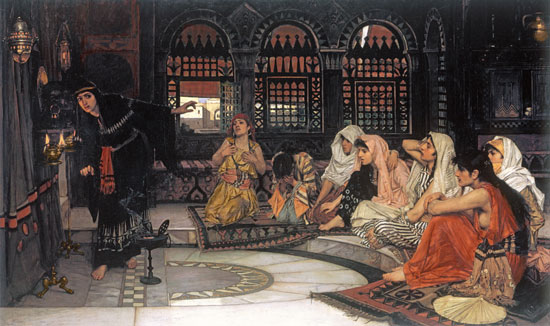
John William Waterhouse, Consulting the Oracle

What whisper from the soul impels a brilliant mind toward studying classical antiquity and psychical research? Did the two great interests of Frederic Myers's life have a common denominator in a metaphysical intuition?

Myers, educated at Trinity College, Cambridge, later taught classics there. He was also one of the founders of the Society for Psychical Research, and his book Human Personality and Its Survival of Bodily Death is still in print more than a century later.

His writings on classical culture are hard to come by today, but when I was in London I was able to buy an old copy of Myers's Essays — Classical. The book is dated 1883, and on the flyleaf is handwritten in ink, "L.H. Lucas. Percival Scholarship. Clifton. — July 1885."

The essays in the book are "Greek Oracles," "Virgil," and "Marcus Aurelius Antoninus." The piece on Greek oracles offers the most clues as to Myers's habits of mind and hints at how his interest in psychical phenomena occasionally crossed over with his studies of ancient Greek and Roman civilizations.

Myers reckons that oracles played a major role in the psychological life of the classical world from about 700 B.C. to A.D. 300. Generally, oracle means a location where it was believed that gods or spirits spoke to humans through an entranced person, dreams, or portents. (The term is also used for the person through whom the spirits communicated.) No one knows how many oracles existed in the Mediterranean and Aegean regions, but by some estimates there were hundreds. Only a few were recorded in literature of the times that survives, though. The most renowned were those on the Greek island of Delos and at Delphi, near Mount Parnassus.

Photo Sharing and Video Hosting at Photobucket

Myers analyzes the evolution of the oracular phenomenon from primitive beginnings akin to shamanism, to a method for summoning the gods that inspired the Attic imagination, to a sophisticated form of mystery religion, to a decline paralleling the growth of skepticism epitomized by Lucretius toward the old religious practices, and finally … a late and suprising revival, nudged by neo-Platonic mysticism.

As a writer, Myers sometimes goes over the side, with "purple" patches of the sort that were popular in his day (e.g., "The Sibyls died in the temples, and the sun-god's island holds the sepulchre of the moon maidens of the northern sky"). But against the occasional excesses, we must count numerous phrases that turn the dried and cracked fragments of antiquity into sparkling monuments.

How can we resist
It was Apollo who warned the Greeks not to make superstition an excuse for cruelty; who testified, by his compassion for human infirmities, for the irresistible heaviness of sleep, for the thoughtlessness of childhood, for the bewilderment of the whirling brain. …
After the great crisis of the Persian war Apollo is at rest. In the tragedians we find him risen high above the attitude of a struggling tribal god. Worshippers surround him, as in the Ion, in the spirit of glad self-dedication and holy service; his priestess speaks as in the opening of the Eumenides, where the settled majesty of godhead breathes through the awful calm.
He describes Orpheus as "the centre of the most aspiring and deepest thoughts of Greece … who walks the earth with a heart that turns continually towards his treasure in a world unseen."

Myers himself was drawn to a world mostly beyond the reach of the sense organs, one which elusively and teasingly makes itself known or felt, then melts away. His interest in the inner meaning of oracles took off from that.

Photo Sharing and Video Hosting at Photobucket

He writes of "the most celebrated class of oracles, — those in which the prophetess, or more rarely the prophet, gives vent in agitated trance to the words which she is inspired to utter. We encounter here the phenomena of possession, so familiar to us in the Bible, and of which theology still maintains the genuineness, while science would explain them by delirium, hysteria or epilepsy. It was this phenomenon, connected first, as Pausanias tells us, with the Apolline oracles, which gave a wholly new impressiveness to oracular replies. … These oracles of inspiration, — taken in connection with the oracles uttered by visible phantoms, which became prominent at a later era, — maybe considered as marking the highest point of development to which Greek oracles attained."

The ancient world's concept of the powers of the Pythia — the prophetess at the Delphic oracle — varied, Myers noted, from "mere clairaudience to the idea of an absolute possession, which for the time holds the individuality of the prophetess entirely in abeyance." His own views about the meaning of oracles were very probably influenced by his experiences with trance mediumship.

N67F1
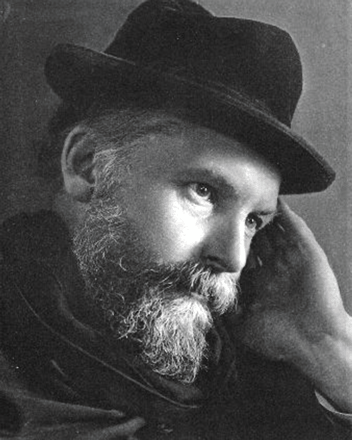
Frederic W.H. Myers

He draws on his wide acquaintance with the classical writers to point out that many of the great thinkers at the dawn of Western civilization recognized what we would now call the paranormal. Hesiod thought that there was "a hierarchy of spiritual beings who fill the unseen world, and can discern and influence our own." Thales defined demons as "spiritual existences, heroes, as the souls of men separated from the body. Pythagoras held much the same view, and … believed that in a certain sense these spirits were occasionally to be seen and felt. Heraclitus held 'that all things were full of souls and spirits,' and Empedocles has described in lines of startling power the wanderings through the universe of a lost and homeless soul."

Photo Sharing and Video Hosting at Photobucket

Plato, Myers says, "brings these theories into direct connection with our subject by asserting that some of these spirits can read the minds of living men, and are still liable to be grieved by our wrong-doing, while many of them appear to us in sleep by visions, and are made known by voices and oracles, in our health or sickness, and are about us at our dying hour. Some are een visible occasionally in waking reality, and then again disappear, and cause perplexity by their obscure self-manifestation." Such perplexity has never been far from psychical researchers.

Under the Roman Empire, oracles continued to be consulted, but they seem often to have been corrupted and politicized. The Christian Church, once established as the state religion, was notably unenthusiastic about what it was bound to regard as a rival source of truth. But just as the oracular cult was withering, it gained new life with neo-Platonism and died in a spectacular sunset.

Myers traces "the gradual development of the creed known as Orphic, which seems to have begun with making itself master of the ancient mysteries, and only slowly spread through the profane world its doctrine that this life is a purgation, that this body is a sepulchre, and that the Divinity, who surrounds us like an ocean, is the home and hope of the soul."

Porphyry — who was struck by "that single-hearted and endless effort after the union of the soul with God which filled every moment of the life of Plotinus [the most renowned neo-Platonist]" — was the author of what Myers calls "by far the most careful inquiry into the nature of Greek oracles which has come down to us from an age when they existed still."

According to Porphyry, "the oracular or communicating demon or spirit, — we must adopt spirit as the word of wider meaning, — manifests himself in several ways. Sometimes he speaks through the mouth of the entranced 'recipient,' sometimes he shows himself in an immaterial, or even in a material form, apparently according to his own rank in the invisible world. The recipient falls into a state of trance, mixed sometimes with exhausting agitation or struggle, as in the case of the Pythia." If you substitute the word medium for recipient, here is a description of the classic 19th century séance.

Photo Sharing and Video Hosting at Photobucket

Porphyry also noted that oracles could give dodgy information if the time and circumstances were wrong, and were capable of telling falsehoods. "Porphyry attributes this occasional falsity to some defect in the surrounding conditions," writes Myers, "which confuses the spirit, and prevents him from speaking truly. For on descending into our atmosphere the spirits become subject to the laws and influences which rule mankind, and are not therefore entirely free agents. When a confusion of this kind occurs, the prudent inquirer should defer his researches, — a rule with which inexperienced investigators fail to comply." Porphyry (or Myers) might be issuing a caveat to the overly credulous among modern spiritualists. Myers himself, though he obviously believes that oracles to some extent manifested the deeper dimensions of human consciousness, is hardly willing to accept the legends about them at face value.

For Frederic Myers, the best attitude when thinking about oracles (and all other enigmas of the mind and spirit) was that of Socrates, "in his assertion of a personal and spiritual relation between man and the unseen world, an oracle not without us but within."

Photo Sharing and Video Hosting at Photobucket

This posting originally appeared in longer form as my article in The Paranormal Review (July 2003), published by the Society for Psychical Research. I thank the Society for allowing me to adapt it.

Monday, October 01, 2007

Political correctness must die -- II

The way is up along the road, the air is growing thin
Too many friends who tried,
Blown off this mountain with the wind


Meet on the ledge, we're going to meet on the ledge
When my time is up, I'm going to see all my friends
Meet on the ledge, we're going to meet on the ledge
If you really mean it, it all comes around again

—Richard Thompson, "Meet on the Ledge"

Now comes the tough part.

In the previous posting, I tried -- not very well, I think -- to briefly encapsulate the meaning of political correctness and the grip it has on our lives. The far more important issue is, what are we to do about it?

Photo Sharing and Video Hosting at Photobucket

What are we to do about it? I can't emphasize that enough. Of calling attention, complaining, sharing our misery, there is no end. Not a day goes by when I don't read somebody's viewing with alarm the Mexican Invasion, the continued immigration of Muslims into Europe and the United States, the government finger on the scales tilting them in favor of "minority" groups (which, collectively, are scheduled to soon be a majority). Take VDare -- please. I used to respect the site, until I finally got my head around its unwillingness to prescribe any antidote to the poison of virtually unlimited Third World immigration. It exists to cry, Woe is me. Send money so it can carry on crying, Woe is me.

To hell with that.

And to hell with all griping. You are wasting your élan vital. The system of political correctness that rewards and punishes us has a safety valve. Except in the most extreme cases, like the New York Times, you are allowed to say "ouch." Your complaint might even be published, to keep up the semblance of a free society. Won't you be proud to see your letter to the editor in print? Yes, right, that's going to overcome an editorial policy and day after day of slanted "news." Your ego, in this as in so many situations, is your enemy. It is the bait that traps you.

So we'll start by taking a frighteningly honest look at the big picture. If you'd rather not, stop here and go write a letter to the editor or VDare. You'll feel better for it. I'm not here to make you feel better. I'm here to arm you psychologically for the fight.

Photo Sharing and Video Hosting at Photobucket

Let's kiss off some ideas you have to let go of if you're serious about overcoming political correctness.

"Tom Tancredo." I have the greatest respect for Mr. Tancredo. He is a brave and principled man. His chance of being elected president is less than his opportunity for selling snowshoes in Brazil. The same applies to all political candidates right now (maybe it will not be so in the future, but we have to start with the status quo). The political correctness/multi-culturalist/globalist Establishment has the electoral system wired.

"We'll overcome them in the Culture War." Get real. The Culture War is over. We've lost.

"Once the Sixties generation retires, young people who don't have all that baggage will be in charge, and they'll loosen up." I've toyed with this idea myself, even wrote a blog piece called I'll feel better when my generation is dead. But that was desperation set to music. Younger generations than mine have been brainwashed by the Sixties undead who shape their educational itinerary.

"If things get too bad, really bad, the military will step in and put an end to it." The consequences of a military coup should give anyone profound misgivings. But putting that aside, consider this.

The other day I received an e-mail press release at my office from the U.S. Citizenship and Immigration Services (why I am on their distribution list, I have no idea). Headed USCIS TO HOLD ALL-MILITARY CITIZENSHIP CEREMONY AT FT MCHENRY NATIONAL MONUMENT AND HISTORIC SHRINE, it read in part:
The 18 Soldiers, Sailors, Airmen, Marines, Coast Guardsmen, Reservists, National Guardsmen and a military spouse who will take the Oath of Allegiance and become American citizens are from the following nations: following countries: Cameroon, Czechoslovakia, Federated States Of Micronesia, Germany, India, Jamaica, Panama, Philippines, Portugal, Somalia, Trinidad and Tobago, and St. Lucia.
The Establishment is one step ahead of you. It's filling our military ranks with non-Americans (and awarding them citizenship into the bargain). I have little doubt that one motivation is to ensure that in a crisis, the military will be loyal to the PC Establishment, not the indigenous U.S. citizens.

Photo Sharing and Video Hosting at Photobucket

I know this sounds harsh, but the reality is harsh. If you're serious about defending your America or Western civilization, you have to start by acknowledging the situation. You are living in occupied territory. You must think like a guerilla. (Metaphorically, of course; tying a bandanna around your head and skulking in caves and mountains is off the menu.)

Another reason for recognizing that you are in occupied territory is that it will discourage you from wasting your energy on trivia that won't make any difference. A law making English our official national language might be symbolically satisfying, but it's part of the assimilationist package that no longer counts. Assimilation is feasible in a climate of controlled and selective immigration, but when a country is undergoing colonization by foreigners, the language issue becomes irrelevant. If Latin Americans become a majority in all our cities in the next 30 years, I don't doubt that they will become bi-lingual and speak a kind of basic English when they have to deal with gringos. That's the plotline in New York today.

Yet another reason is so you understand the risk you will be taking. You can't kid yourself. Right now the PC Establishment is fat and happy, savoring their dominance. They can afford to allow some criticism — a safety valve, as I said before. But if they start feeling insecure because they are losing some of their hold over minds and hearts, it will be a different story and no mistake. Posts like this, or opposition to immigration, may become illegal under "hate speech" laws. When you challenge the PC industry, you have to remember you've got a 'gator by the tail.

Photo Sharing and Video Hosting at Photobucket

Very well then. We know the stakes and the risks. Now it's time to plan.

I'm listening.

Excuse me? You thought I was going to tell you how to overthrow the PC politburo? Look: you are still not getting it. There isn't any Master Plan. No manifesto for a Movement. No inspirational leader, which is just as well; inspirational leaders get too full of themselves and are dangerous.

You are in charge, if you want to accept the mission. When the time comes, you will know what needs to be done without anyone issuing instructions.
Far harder than knowing the right thing will be to do it, when we can easily visualize the bill to be paid. I'm not sure if I'll be up to it. It might take people who are younger and braver. But you won't be alone. You'll be with others, even if they're invisible at the moment; some perhaps known to you, many others not, some who lived before you were born. We're going to meet on the ledge.

Photo Sharing and Video Hosting at Photobucket

I heard a radio interview with a Washington Post reporter who's written a series about IEDs in Iraq. What I found most interesting was when he described how our soldiers improvised their own anti-IED devices. They were sometimes as outlandish as mounting a hair dryer on a pole in front of their vehicle to mislead heat-seeking warheads from IEDs. The point is, they took responsibility for their own lives, which perhaps some had not often done before. They didn't wait for a general in the Pentagon to issue orders about IEDs. They didn't wait for the next edition of the counterinsurgency manual with a new chapter about dodging IEDs.

If there's one thing we Americans are good at, it's improvising.

I do have one suggestion. To help preserve what's best in the traditions of Western civilization, be part of it. Read a classic book you've been putting off. Listen to a Schubert symphony. Visit a museum or gallery with real art, not commercial cutesy-poo junk. Get to know our country's founders, who weren't demigods, who argued and compromised, but nonetheless produced a Constitution that has stood the test of time remarkably. (If I had another lifetime — which I expect to, but I don't know when — I'd spend a couple of years reading James Madison's Federalist Papers.) And if you have young children, introduce them to the best of our heritage. Nothing could be more subversive to the present order.

Each in our way, subversives is what we are.

Political correctness must die.

Photo Sharing and Video Hosting at Photobucket