Thursday, November 21, 2013

Concert: Alice Sara Ott plays Liszt at Kennedy Center


This time I will resist the temptation to begin the posting with a diatribe about Washington's vulgar Kennedy Center for the Performing Arts, its Stalinist mausoleum architecture, its flashy red carpet ... uh-oh. I can't help myself.

But the center of attention is young pianist Alice Sara Ott, who dropped by the other night to play Liszt's Piano Concerto no. 2 with the National Symphony Orchestra. My wife and I sat in Row B -- that's right, second row from the stage, directly behind conductor Neeme Järvi and the mighty Steinway that almost (but thankfully, not quite) blocked the view of Ms. Ott.



Alice Sara Ott radiates an attention-capturing quality that not even her publicity shots quite convey. Still photos don't reveal the animation, the apparent moods that cross her face like clouds. A Eurasian -- German and Japanese ancestry -- she projects a rare exotic allure. ("There is no great beauty that hath not a touch of strangeness about it," Francis Bacon said.)

Stage presence? Enough to spare. A smile that could illuminate the auditorium on its own. She wore a sleeveless purple silk, floor-length dress ... and from my almost front-row seat, I noted with surprise that she pressed the piano pedals with bare feet. 

Is all this calculated? To some extent, almost surely. She's an actress as well as a musician, knowing how to make the most of her sylph-like figure (I doubt she weighs more than 110 pounds) and gestures. She may enjoy the feeling of the pedals under her feet, or knows that it gives her an eccentric vibe that's useful for journalists writing about her, or both. Who cares?

A strain of puritanism among classical music audiences deplores concern with such "irrelevances" as looks and demeanor. Those who hold this view would be just as glad if the soloist were hidden behind a screen, as I understand is now standard practice in auditions for orchestra players. Fiddlesticks, as violinists are wont to say (or won't say).  

It's called performance. A performance is the whole, the big picture, the Gestalt. Ott isn't the first glamourpuss of either sex to dramatize a performance, and she won't be the last.

Furthermore, Ott's attractive manner extends to -- excuse me? Her piano playing? How can you interrupt thus, when I was just warming to my subject. All right, all right.


Franz Liszt's two (?) concertos are rarely played and recorded. I'm not sure I ever even heard no. 2 before. It's not that they're bad -- just that Liszt was a pianist to the bone, like Chopin, and the orchestral part of the score is no more than accompaniment. Most people who appreciate Liszt would rather hear his music, shall we say, unencumbered by an orchestra around its neck.

You ask how well Ott played her part? Listen, friend, I don't know how any human being can play Liszt. It takes fantastic prestidigitation. Those machine gun-paced notes! Those hand crossings! Keyboard sweeps! Impossible. It also takes a sense of when to go inward, caressing the keys to melt the heart.

All I can tell you is, Alice Sara Ott took the piece by storm and, to my untutored ear, it was one of the most exciting performances I've ever heard. Other pianists might have done it differently, perhaps "better" (whatever that means). It doesn't matter to me. I'll never forget that brief (less than half-hour) concerto.

The first piece on the program was Kodaly's Suite from Háry János. I've heard a few recordings of it that didn't leave much of an impression, but in live performance -- and Järvi seems to have a feel for the Hungarian and Czech idiom -- it was sensational. The score includes unusual instruments for a classical composition, including the celesta and xylophone.

After the Liszt and intermission, the program concluded with Prokofiev's Suite from Romeo and Juliet. It was a little bit of a letdown, and I generally love Prokofiev. But Järvi didn't give it much breathing room. The "Shakespeare" play is both a romance and a tragedy, and has a vein of violence running through it, but this reading downplayed the romance disappointingly. There was a shade too much brutality. Järvi drove the horses hard and put 'em away wet.

Speaking of Maestro Järvi, I have listened to recordings of him conducting since the 1980s, and went through a period when I thought he was one of the world's greatest conductors. I was heard to say that he should have gotten Chicago after Solti or Berlin after Karajan. Now I think my opinion of him was inflated at the time, but there's no question in my mind that he is very talented (as is his son, also a conductor, Paavo Järvi).

He was energetic on the podium, but when he turned to face the audience, I was a little saddened: he is old. Well, it happens to all of us, sooner or later, if we live long enough. But orchestra conductors are a hardy breed, and their careers often don't end at the age when others retire. I believe Stokowski was about 95 when he made his last recordings. I wish Neeme Järvi many years of further service to the cause of music.

Tuesday, November 19, 2013

(Paper)white flight


I've long been intrigued by the idea of an e-reader but never owned one. Recently my wife gave me a present -- an Amazon Kindle Paperwhite 3G, supposed to be the most advanced ever.

In such free time as I am allotted, I've started getting acquainted with it. Although there are no buttons (other than an on-off switch) and you convince the Paperwhite to do what you want it to by tapping the screen, navigation is actually pretty easy and I think will quickly become second nature. The screen is smaller than a paperback book but you can (with its preferred file types such as AZW and MOBI) choose a font and adjust its size.


Being able to carry hundreds of books or periodicals, and select any you want to read at a given moment, in a device you can hold in one hand is obviously useful. So is being able to download such items without even a Wi-Fi hot spot (with the 3G version, not earlier generations). This is no toy. In their way the Kindle and other e-readers are as much of a game changer as the PC.

So far I have only one gripe, and it's about Amazon's incomplete instructions. The how-to onscreen manual starts well, clearly explaining the moves you need to make and the menus, in something very like actual English instead of technobabble. So far, so good. 

But after that it's pure sales promotion, herding you to the Amazon store. That's okay too; most Kindle users will want to buy some downloaded books from Amazon.com. I understand the company doesn't make money on the Kindles themselves, so it's reasonable they'd flog e-books from their own store.


But that's all you're told. Not a word about how you can use the Paperwhite for books and periodicals from other sources, some of then [whisper] free -- the Gutenberg Project, for instance. Certainly no instructions for converting other types of files to MOBI.

So you have to go online and find tutorials, written and video, which are of varying quality. Free conversion software is available; Mobipocket Creator and Calibre seem to be most prominent (not, as I say, that you'd ever hear about them from Amazon). Once they do their job, you transfer the MOBI file to the Paperwhite via a USB cable. 


It's not actually hard, but typically of software developers, they don't explain the conversion technique well. Through trial and error or, if you must, one of those "For Dummies"-type Paperwhite manuals (presumably), you get the hang of it. If I can, anybody can. I suppose the average eight-year-old today would understand the process quicker than I did.

Regardless of Amazon's rather petty withholding of useful information, the Paperwhite is life-enhancing, and a welcome diversion from our national Time of Troubles.


Tuesday, November 12, 2013

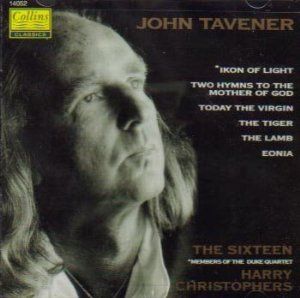
Sir John Tavener


Every age has its outstanding artists. But among those are few who seem to listen to their inner voices more than to their time and place. Even fewer are those who can convey to a wide audience what stirs in their souls. Sir John Tavener (1944-2013), who passed over yesterday, was one of those. His musical accomplishment was both intensely personal and intensely impersonal, opening vistas in sound that we are deaf to until they are revealed.

Like most listeners, I discovered his music through his popular (well, "popular" as things go in the world of classical music) The Protecting Veil. It was astonishing to find a contemporary composer who seemed to ignore the kind of stuff written by academics in their nests as "composers in residence" at universities, but instead anchored his aesthetic in the traditions of worship.

Tavener, an Englishman, was famously a convert to Orthodox Christianity, and his work obviously has a kinship with Orthodox church music. There were other influences, including a difficult life, which involved dodgy health; he nearly died of a heart attack in 2007. If anything his worldly misfortunes seem to have further driven him toward transcendence.

I have collected quite a few recordings of Tavener's music. Tonight, after reading of his departure from this world, I listened to Svyati, for string orchestra and chorus, and The Hidden Treasure, for string quartet with Steven Isserlis playing the cello part. (He has attracted star-quality musicians to perform his compositions.)


Reading the obits in The Guardian and The Telegraph, I was surprised to learn that he first attracted attention in the '60s as a conventionally rebellious author of -- in the words of Tom Service, writing in The Guardian -- pieces that were "tumultuous, chaotic, modernist, and radical." Equally surprising is the large number of works he has created since then in his Orthodox-influenced phase. I look forward to getting acquainted with those I don't know.

The pianist Artur Schnabel said that Beethoven's last sonatas were greater than they could be played. In a sense that is true of what Tavener has given us. No music, Beethoven's or his, can fully represent infinite longings. Tavener's seems ancient, but without a touch of antiquarianism -- he uses the full resources of modern instruments and performers. Yet we are not listening either to now or any past "now." The eternal has cracked the shell of time.

John Tavener. Rest in peace, and in the music of God.


Friday, November 08, 2013

If you like your afterlife plan, you can keep it!


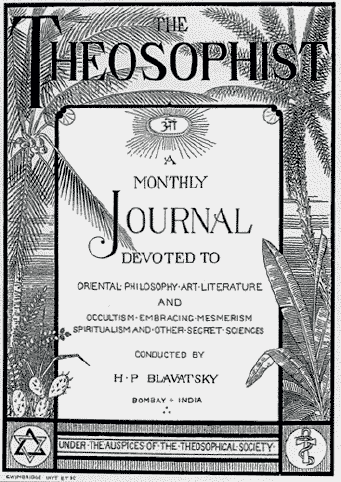
So says no less a person -- well, spirit -- than Helena Petrovna Blavatsky. She has been gone from the Earth sphere since 1891, so she should know. Or not. She reports, you decide.

Blavatsky was a co-founder of the Theosophical Society, and undoubtedly one of its most effective advocates. The society has had the usual organizational upheavals and schisms, and never attracted a mass following, but its philosophical influence has been far out of proportion to its numbers.


Among its teachings was the doctrine of reincarnation. Before the Theosophical Society came onto the scene, the idea that people lead successive lives to gain experience and develop spiritually was virtually unknown in the modern Western world aside from a few scholars of Asian (called in those days "Oriental") religions. Since Blavatsky and her successors such as Annie Besant -- a multi-purpose reformer whose other interests included socialism and feminism -- delivered the message, reincarnation has entered mainstream thought, though not necessarily acceptance.

Surprise: from her new perch in the afterlife, Blavatsky has decided that reincarnation is tosh. How do we know? She's told us via mediumship.


On Nov. 1, 1922, Blavatsky dropped in on Dr. Carl Wickland's psychic rescue circle for patients plagued by obsessing earthbound spirits. I wrote about Dr. Wickland and his book Thirty Years Among the Dead in this post. Blavatsky, on the Other Side, was not bothering the living. But she wanted to talk about some of the things she'd learned after passing over, speaking via Mrs. Wickland, a trance medium.

Here is a partial transcript of Blavatsky's message, recorded in Dr. Wickland's book.
I studied Reincarnation, and I thought there was truth and justice in the theory that we come back and learn and have more experiences. I taught it and wanted to bring it out to the world and its peoples.

I felt that I remembered far back in my past. I felt I knew all about my past, but I was mistaken.


Memories of “past lives” are caused by spirits that bring such thoughts and represent the lives they lived. A spirit impresses you with the experiences of its life and these are implanted in your mind as your own. You then think you remember your past.
 

When you study, especially when you study Theosophy, you develop your mind and live in an atmosphere of mind. You remove yourself as much as possible from the physical. Naturally you become sensitive, and naturally you feel the spirits around you. They speak to you by impressions and their past will be like a panorama. You feel it, and you live over the past of spirits and you make the mistake of taking this for the memory of former incarnations.
I did not know this when I lived. I took it for granted that these memories were true, but when I came to the spirit side of life I learned differently.
She later returned to the subject.
When you have once reached the spirit world, where all are congenial, where all is life, where all is bliss, where there is no jealousy, no envy, where all is one grand harmony, do you think for one moment that you would want to leave that beautiful condition to come back to earth and be a little baby, restricted in mind and knowing nothing - nothing whatever?
 

Furthermore, you might get into a sickly, crippled body and be worse than you were before.
 

No, reincarnation is not true. I believed it, I taught it, and I was sure that I should come back and be somebody else. But I will not. I can do far more good now.
My impression is that Blavatsky (why is she continually referred to as "Madame" Blavatsky in Theosophical circles?), while in our world, had a strong intuitive grasp of certain profound truths, but was also too ready to believe and proclaim a lot of cant and nonsense. Supposing her spirit was speaking at Dr. Wickland's circle, good on her for exercising a woman's prerogative to change her mind.


If the tone of these comments sounds flippant, you may be wondering whether I take the subject seriously or if this is a jest. Well, if I had refused to treat serious matters with a touch (or more) of humor, half the postings on this blog would not have been written. Questions of what happens after we depart this life could hardly be more important in my view.

Belief in reincarnation is now almost universal among people practicing the various forms of yoga and disciplines derived, even at a wide remove, from the Vedanta tradition. Most Buddhists seem to believe in it as well, although it's incompatible with Buddhism's core notion that there is no continuing self or soul. And finally there are those who come under the "New Age" heading.

I've spent a lot of time around such people, and I suppose it has influenced me to lean toward incorporating reincarnation in my outlook. Even so ... I'd never deny that it's possible; but I'm not convinced.


Survival of consciousness in a post-mortem state seems nearly certain if you are willing to look at the evidence, as a whole, without prejudice. For reincarnation, the picture is cloudier.

There are two basic methods of studying the possibility of reincarnation: "past-life memories" of young children and hypnotic regression.

I greatly admire the work of the late Ian Stevenson and his colleagues studying children's alleged past-life recall in situ, talking to the children and other people involved, using means as scientific as possible under the circumstances. Some of the cases he writes about are intriguing and a few almost seem to clinch the argument. But they never quite rule out alternative explanations -- for instance, Blavatsky's suggestion that they are not remembering their own past lives, but lives of attaching spirits.

Hypnotic regression also produces some fascinating material, but is even more open to doubt. Although hypnosis is widely practiced in psychotherapy, including past-life regression therapy, we still don't understand what hypnosis is. We know plenty about some things it can do, but not how or why. What is in no doubt is that hypnotized subjects are extremely suggestible and imaginative. Their visions of living in other times and places are surely real experiences to them. But dreams and hallucinations are phenomenologically real, too.


Explanations of the need for reincarnation tend to be of the "school of life" variety -- we have to keep returning until we've learned all our lessons -- or based on the supposed Law of Karma, that we must reap the results of all we've ever done. Again, I can't dismiss these claims, but they are just theories (however many thousands of years they've been on the Ancient Wisdom pop chart), neither provable nor disprovable.

I can tell you this from extensive reading of the literature on reincarnation: no one's story or "memory" of a previous incarnation that it has been possible to investigate through historical records has been 100 percent factually correct. Some have been partly confirmed -- impressive in itself, granted -- but those same examples include statements that not only can't be substantiated, but are shown to be wrong. In hypnotic regressions, there is usually a curious inability to come up with specifics, such as the person's name in the earlier life, the year, who was the king or president at the time, what the town, city, or country was called, &c.

Personally I hope the spirit Blavatsky is right and we continue our growth toward Ultimate Reality without having to be wrapped in a physical body again and again. Maybe the best possibility is to be offered a choice, not a requirement -- if you want another go-around in Earth life, the train is leaving on track 9. If prefer your spirit arrangements, you can keep them.


Sunday, November 03, 2013

I hate to see that evening sun go down


I hate to see that evening sun go down
'Cause my lovin' baby done left this town.

 
If I feel tomorrow like I feel today
I'm gonna pack my trunk and make my getaway.

--W.C. Handy
"St. Louis Blues"

What's with this Daylight Saving Time lark, anyway? (Usually and mistakenly called "Daylight Savings Time," as though prices on everything are reduced while the sun pours.)

Inevitably, at this point in the year when we're told to "set our clock back an hour," in one of the Standard Journalistic Stories dusted off annually it is re-revealed that there was no such thing until comparatively recently and that various countries observe its beginning and end at different dates.


Presumably, the original idea was ... why did anybody think it made sense? Arizona, where I used to live, secedes from the Time Union: the last thing anybody in Phoenix or Tucson, broiled in summer days, wants is another hour of sun torment. Maybe, when we were an industrial country, it was assumed that factory workers exiting the dark satanic mills would welcome a wodge of extended solar radiation.

But no law can alter the Earth's wobble or whatever it is that shortens the day in the northern hemisphere in the colder months. So shifting hours is a pure trade-off. The sky lightens up sooner and darkens sooner.


Why is this supposed to be a boon? Sure, it's dreary to rise from sleep's grip when it feels like nighttime to head off to the job, for those Americans who still have one. The end of DST mitigates that somewhat. But few who spin and toil are in the mood for contemplating nature's creations at half-six in the morning; the unemployed and retired remain sunk in dreamland until their windows are lit anyway.

Instead, the salarymen and salarywomen are privileged to find their way back to their dwellings after work in the gloom of Erebus. Some cranks, myself among them, would argue that we've got the time edit backwards: DST should be in winter, not summer.

Or we should at least stop fiddling with what astrophysics sends us.

Friday, November 01, 2013

The borders of reality


The anti-Obama commentariat (and some of his former coat holders) are gloating over the size XXXXL debacle of ObamaCare, as well as all the other evidence that this man is too petty, self-centered, and ignoble to preside even over a country as tattered as the U.S. Fine. But even if his plan to place our health in the hands of gray-faced bureaucrats goes under, the population replacement goes on.

If the United States continues to adopt the Third World wholesale, it won't make a damned bit of difference in a few years what the score is now. Massive immigration of financial opportunists will ensure a permanent control by politicians who promise the most freebies and attempt to fulfill the promise by shaking down the productive elements of society until they are in the same boat with the welfare class.

Hark to this: the problem isn't "illegal immigration." It's massive immigration, period. The Magic Hopemaster wants to solve illegal immigration by making it legal, while everybody is glued to the TV watching his disposable ministers like Kathleen Sebelius being harpooned. Various me-too Republicans are already lining up to acquire a plethora of grateful immigration invasion voters in their states or districts.

In a way the Hopemaster and his controllers do know something of the stage magician's art. The magician keeps the audience distracted with much more flamboyant actions than the sneaky work of setting up the trick.