
Sunday, October 21, 2012
On the road again
This time, with the office's Mac laptop. I should be able to do some postings from ... no, I'll let it be a surprise.


Wednesday, October 17, 2012
Sign of the Times

Not intellectually, but tactically. They are more clever in grafting their agenda onto the society they're determined to remake.
Radicals understand the power of the fait accompli. They know that each time they attain a goal, by fair means or foul, the chances of a rollback are slim. Then they move on to the next goal. Repeat, repeat, repeat.
Most people aren't driven in the way leftists are. I don't think Yeats got it quite right ("the best lack all conviction, while the worst are full of passionate intensity"). The best are full of passionate intensity about the best things -- and that doesn't include the politics of totalitarian utopias. Their deepest values tend to be human ones: family, friends, spirituality, work, hobbies, sports, arts, science. Those are more real to them than power trips.
Humans are adaptable. Very. That's useful in many cases, but a poor defense against the creeds of madmen. At a certain point ordinary people's anger dulls, the sense of urgency dissipates. They learn to live with the new normal. Eventually they don't much notice. They have kids, the kids grow up with no concept of how it was before the revolutions large and small. And the ratchet gear turns another notch.
On the home page of the Los Angeles Times today:
- Tigres, a un triunfo de Serie Mundial
- La argentina de Messi baila sola en las eliminatorias
- México cierra año redondo con invicto en la eliminatoria y el oro olímpico
| Los Angeles, California is really a second Tijuana, Mexico, and it is becoming more so every day. Los Angeles, California, may have as many as three million hardy souls who at some time crossed the border illegally and have remained together – maintaining their native tongue and lifestyle above all else. There are more people of Mexican descent in Los Angeles than in any other place on earth except Mexico City. There are even more Spanish speaking radio stations in Los Angeles than there are English speaking stations. When Mexican politicians want to reach their second largest national constituency they leave Mexico and come to Los Angeles. Yes, the Mexican illegal alien population in Los Angeles makes it the second most populous Hispanic city in the world and their votes do count. | |||||
For example: "The violence of Tijuana, Mexico often sends AK-47 rifle fire over the border and into U.S. Border Patrol vehicles. To limit the mayhem, many Border Patrol vehicles used in dangerous areas -- even a quarter mile north of the border -- are fully armor plated."
Is this cross-border gunfire not an act of war? But our Attorney General approved a dim-witted scheme that exported automatic rifles to Mexico. We can't even get him impeached. We should tell Mexico that they will stop sending their gangs and surplus population to the United States -- or else. But we don't. We adapt to "reality."
The United States is today scarcely more than a geographic expression and a legal system that perverts the original spirit of the Constitution. It will split up in the next 30 years, destroyed by the progressive and globalist capture of the government, media, and academia.
Only one question matters about the transition: will we have a constitutional amendment setting the rules for peaceful secession by states, or will we have another war of federal suppression à la 1861–65?

Sunday, October 14, 2012
This is the way the free world ends
This is the way the world ends
This is the way the world ends
This is the way the world ends
Not with a bang but a whimper.
- T.S. Eliot
Thousands of Muslims have pledged a series of protests against Google HQ for a "hateful and offensive" anti-Islam video, saying they now live in an "age of mockery".
A protest by 10,000 Muslims outside the offices of Google in London today is just the first in an orchestrated attempt to force the company to remove an anti-Islamic film from website YouTube in Britain.
Thousands had travelled from as far afield as Glasgow to take part in the demonstration, ahead of a planned million-strong march in Hyde Park in coming weeks. Anger over 'The Innocence of Muslims', an American-produced film which insults the Prophet Mohammad and demeans Muslims, according to protesters, remains available to watch on the website YouTube, a subsidiary of Google.
UPDATE 10.15.12: I was mistaken that the Telly would quickly bury the story. They still have a link to it today. I was correct that otherwise no major U.S. or U.K. news medium would notice it. The only other story I could find was in something called RT.
I suppose you have to give the Telegraph credit for a little courage. A little: you will notice that they do not dare allow comments from all the "fascists"/"racists"/"neo-Nazis" (i.e., ordinary English people). A quick check of the pathetic Daily Mail and the leftist Guardian reveals no articles about the demo.
Organiser Masoud Alam said: "Our next protest will be at the offices of Google and YouTube across the world. We are looking to ban this film.Muslims represent 4 percent of the British population according to one estimate. Obviously they are feeling their power.
"This is not freedom of expression, there is a limit for that. This insult of the Prophet will not be allowed.
The group's next action was a march Mr Alam hoped would be "a million strong" would take place in Hyde Park "in the next few weeks", he said. "Until it is banned we will keep protesting," he added.

Unless we stop and reverse Muslim immigration now.
Your move.
Saturday, October 13, 2012
Second-hand news

With a mixture of embarrassment and satisfaction, I admit I have not watched or listened to the Romney-Obama or Ryan-Biden matches. Maybe it's my duty as a citizen, but what am I a citizen of? A post-American America, a corporate-political class oligarchy, a Marxist egg busy hatching. The truth is, getting close enough to the election farce to perceive it directly makes me so ill I want to take to my bed.
But I have exposed my tender soul to written accounts of what passes for debate in this year of grace (or disgrace) 2012. Most recently, this opinion piece in the Wall Street Journal.

But while I would cross the street to avoid Joe Biden, I think he made more sense in a few things he was quoted on than the Journal's neocon writer would acknowledge.
To hear Mr. Biden tell it, the Obama Administration now has a new red line on Iran. The mullahs can enrich as much uranium as they wish as long as they "don't have something to put it in." This isn't the red line Israel's Bibi Netanyahu had in mind during his recent speech before the United Nations. Nor are Turkey, Saudi Arabia and others looking for proof of an Iranian ICBM before they decide to go nuclear themselves. Iran becomes a regional nuclear power when it demonstrates its ability to get the bomb at almost a moment's notice, which is when it has developed enough fuel for it.No, I don't want the mad mullahs able to fling nukes around like Zeus tossing lightning bolts. If it were not for Papa Doc Obama's feckless leading by appeasement, we probably could threaten Iran with utter and total devastation should it loose a single atom bomb anywhere, especially on the Little Satan in its backyard.
The mullahs can bang on about Imam no. 12 and having it away with 72 virgins or goats, according to taste, but they are human and I suspect they really aren't that eager to be vaporized. More importantly, if we announced a credible policy of massive persuasion on the model of our calling cards on Japan in 1945, the Iranian population might well decide to pull down the temple on their demented leaders' heads.
The Veep made a spirited case as well for doing nothing in Syria—no "no fly" zones, direct arms supplies to the rebels, or any U.S. political lead in an intervention. "If, in fact, it blows up and the wrong people gain control, it's going to have impact on the entire region, causing potentially regional wars," he said of Syria. News stories suggest this is happening already without any U.S. involvement, as the Syrian war pulls in Iraq, Lebanon and Turkey.I agree. No "no fly" zones, no direct arms supplies to the rebels, &c. Let Syria be Syria, which is to say, let its factions blow each other to hell. Not our problem. We still have the dregs of a Cold War mentality: we think any rotten dictatorship anywhere (like any Commie regime back in the day) is a clear and present danger.
Mr. Biden appeared to preview another Obama policy shift on Afghanistan. With a 2014 deadline to transition the security lead to the Kabul government, the discussion will shift to how large the American military footprint will be afterward—with up to 30,000 U.S. troops left behind to ensure the Taliban don't overrun Kabul again.Why do we need a footprint in Afghanistan? We've lost the war, we're playing tennis with the Taliban anyway. What if 30,000 troops can't stop the Taliban overrunning Kabul again? Will we replay the boots-on-the-ground movie?
But Mr. Biden said something different: "We are leaving in 2014, period, and in the process we're going to be saving over the next 10 years another $800 billion." He added that Afghan forces are ready to defend the country themselves and lead the fight in the difficult east, another piece of intelligence that's news to us.
Of course the Afghan forces aren't ready to defend their country (if you can call it that) and "lead the fight in the difficult east." They probably never will be ready. It's hard to think of a better rationale for making our own presence absent in Afghanistan.
Saturday, October 06, 2012
Who knows where the time goes?
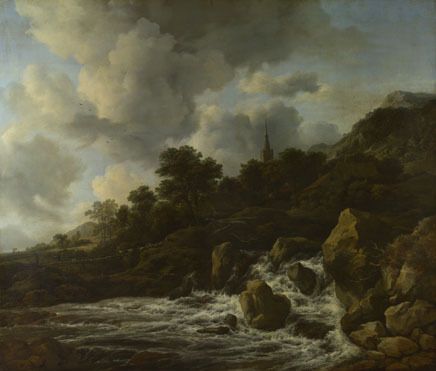
Across the purple sky, all the birds are leaving
But how can they know it's time for them to go?
Before the winter fire, I will still be dreaming
I have no thought of time
For who knows where the time goes?
Who knows where the time goes?
But how can they know it's time for them to go?
Before the winter fire, I will still be dreaming
I have no thought of time
For who knows where the time goes?
Who knows where the time goes?
Sandy Denny,
"Who Knows Where the Time Goes?"
"Who Knows Where the Time Goes?"
Speak, Memory, Nabokov titled his autobiography. His memory spoke to him right enough, but in the way it speaks to us in the latter half of our lives -- not as a connected narrative, but in flashes, images imprinted so strongly that they exert a hold on us after decades and decades.
In Nabokov's case, memories were probably especially uncoupled. The Russian revolution interrupted his youth and his family had to flee from Russia to Germany; needless to say, that required further emigration later. His father was killed by an anti-Communist Russian, in a mistaken assassination. Nabokov became the eternal re-settler.
If he wasn't just rationalizing experiences he couldn't have helped, Nabokov professed to find psychological advantages in discontinuity.
In Nabokov's case, memories were probably especially uncoupled. The Russian revolution interrupted his youth and his family had to flee from Russia to Germany; needless to say, that required further emigration later. His father was killed by an anti-Communist Russian, in a mistaken assassination. Nabokov became the eternal re-settler.
If he wasn't just rationalizing experiences he couldn't have helped, Nabokov professed to find psychological advantages in discontinuity.
I wonder, however, whether there is really much to be said for more anesthetic destinies, for, let us say, a smooth, safe, small-town continuity of time, with its primitive absence of perspective, when, at fifty, one is still dwelling in the clapboard house of one's childhood, so that every time one cleans the attic one comes across the same pile of old brown schoolbooks, still together among later accumulations of dead objects, and where, on summery Sunday mornings, one's wife stops on the sidewalk to endure for a minute or two that terrible, garrulous, dyed, church-bound McGee woman, who, way back in 1915, used to be pretty, naughty Margaret Ann of the mint-flavored mouth and nimble fingers.
The break in my own destiny affords me in retrospect a syncopal kick that I would not have missed for worlds.
Still, it's a strange business to look back on a life that seems to have been lived in water-tight compartments. There isn't a soul, aside from relatives, that I've known for more than 18 years. (At my age, that's not so long.) How much of what we "remember" is spiked by reminders from other people? From photographs and recordings?
In (I guess) my early 20s, I briefly reconnected with a high school companion. He recalled an occasion when I was giving a "speech" in class. He said I'd stood at the front of the room, mumbled for 15 minutes, then finished, "Well, uh, I guess that's all." I had completely forgotten (repressed?) that gormless performance, but I recognized my younger, even more insecure personality.
Sad, deserted shore, your fickle friends are leaving
Ah, but then you know it's time for them to go
But I will still be here, I have no thought of leaving
I do not count the time
For who knows where the time goes?
Who knows where the time goes?
Ah, but then you know it's time for them to go
But I will still be here, I have no thought of leaving
I do not count the time
For who knows where the time goes?
Who knows where the time goes?
Just the other day, in a mood of bottomless boredom, it occurred to me to see if Google could dredge up anything on the Web about my misbegotten tenure as a radio personality in Santa Fe in the '8os. It seemed unlikely -- that was, of course, pre-Internet -- but I did once find a newspaper piece about the chap who'd been my best friend in college, with whom I'd long since lost touch. It was his obituary.
Even Google, no surprise, took me through pages and pages of irrelevant and peripheral Web material. Eventually, it brought up an article in Billboard, dated July 21, 1984, quoting my good self as I was then.
Short concertos are often played complete, but symphonies rarely. Most likely just the quicker movements are aired, with largos or andantes felt to dissipate the upbeat ambience sought by the station. Some purists are displeased, confesses music director Rick Darby, but these dissenters have KHFM [an Albuquerque classical station] to listen to.
Still, says Darby, "We treat the music with respect." All selections are identified on the air, but historical analysis is eschewed. "We're not out to educate our audience," the music director adds.
What was odder than finding that on the Web was, I had zero recollection of it. You understand, in the music business, of which music radio is a part (much more in those pre-YouTube days), Billboard is the New York Times, the Washington Post, and the New Testament. How could I have obliterated all conscious traces of being interviewed for, and my words appearing in, the publication?
That brush with transient fame means nothing to me now, but how many "significant" moments vanish to some Hades from where they cannot be precipitated into the present?
Montaigne, who confessed to having a lame memory, found a benefit in time canceling the past:
I find some consolation, first because I have derived from this evil my principal argument against a worse evil, which might have taken root in me: the evil of ambition. For lack of memory is an intolerable defect in anyone who takes on the burden of the world's affairs. ..
Then, as several other examples of nature's workings show, she has generously strengthened other faculties in me in proportion as this one has grown weaker. I might easily have let my intelligence and judgement follow languidly in other men's footsteps, as all the world does, without exerting their own power, if other people's ideas and opinions had ever been present with me by favour of my memory.Physicists tell us that energy can never be created or lost, only changed in form. The Vedantic tradition of India, and its modern Western derivative of Theosophy, say the same of all past experience. We can forget, but nothing is lost: it resides forever in our individual souls and in the metaphysical Akashic Records.
And I am not alone while my love is near me
I know it will be so until it's time to go
So come the storms of winter and then the birds in spring again
I do not fear the time
For who knows how my love grows?
And who knows where the time goes?
I know it will be so until it's time to go
So come the storms of winter and then the birds in spring again
I do not fear the time
For who knows how my love grows?
And who knows where the time goes?
Occasionally when the conversation seemed to warrant it, I've mentioned the idea of the Akashic Records to people who had never heard of it. My experience is that after a moment while it sinks in, they are surprisingly open to it, as if it's a kind of archetype we all grasp by intuition. Most of our time is lost to our conscious minds down the years, but something insists that eternity has a place for it.
Tuesday, October 02, 2012
How I know cats can love
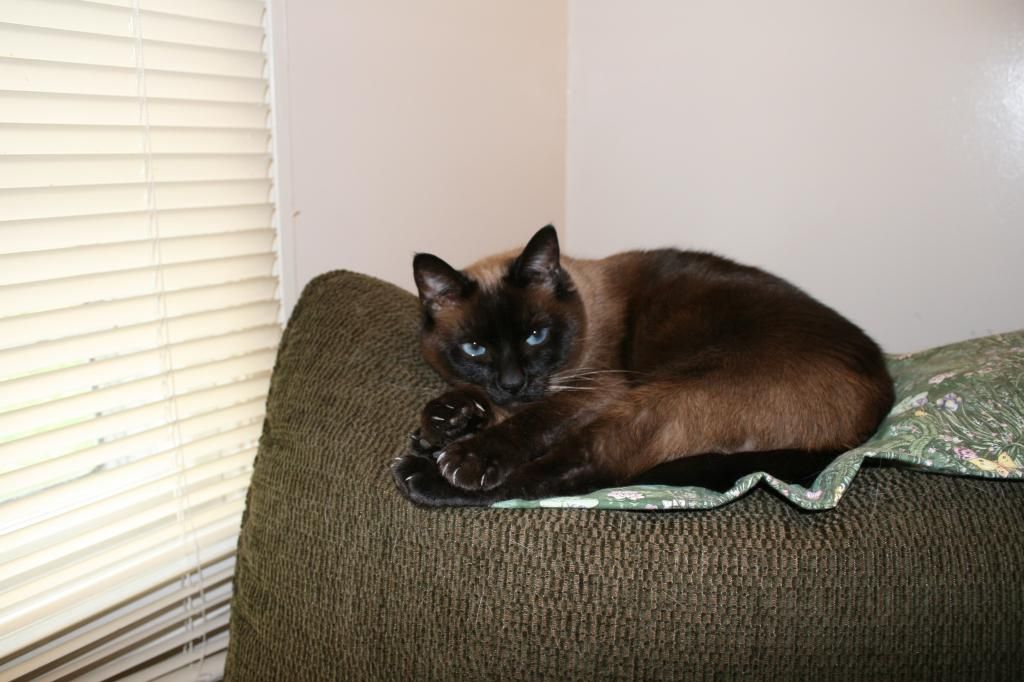
Cosette
When I play with my cat, who knows whether she is not making
me her pastime more than I make her mine?
Michel de Montaigne
Cosette likes to be massaged all over. Especially her head and tummy. Sometimes she even purrs in anticipation.
Often when I'm lying in bed reading, she settles down next to me and reaches for me with her paw to signal she wants attention. If she doesn't get it immediately (which she usually does) she curls up and rests her head against me.
These appear to be loving gestures, but of course they could be no more than peremptory demands for sense gratification. They are not evidence that cats can love. But there is other evidence.
It occurred to me the other day that there is nothing I can do for her in the way of stimulation that she couldn't do for herself. Cats are liquidly supple. She could caress her own head, knead her back or stomach.
Why should she so crave my touch? I can think of only one reason: she wants the knowledge (and for a cat, touch is absolute knowledge) of connection with someone close to her. Another being to whom she is deeply attached.
Am I stretching a point to say that she loves? Some might think so. I don't.
Subscribe to:
Posts (Atom)